Capital City Diner to close

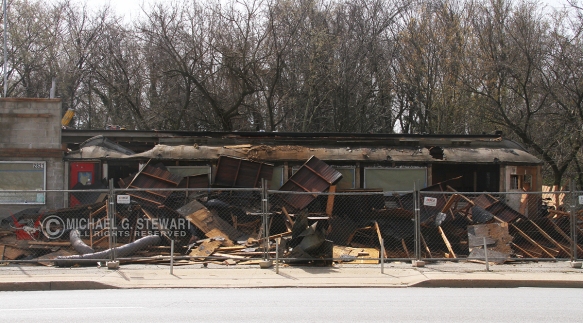
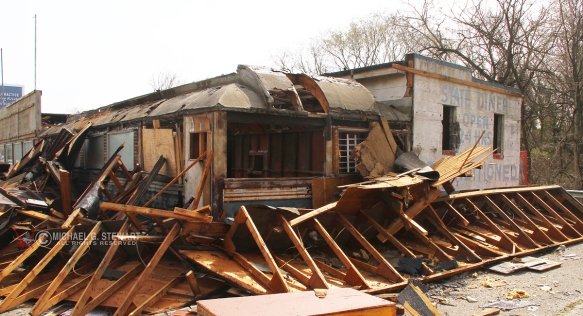
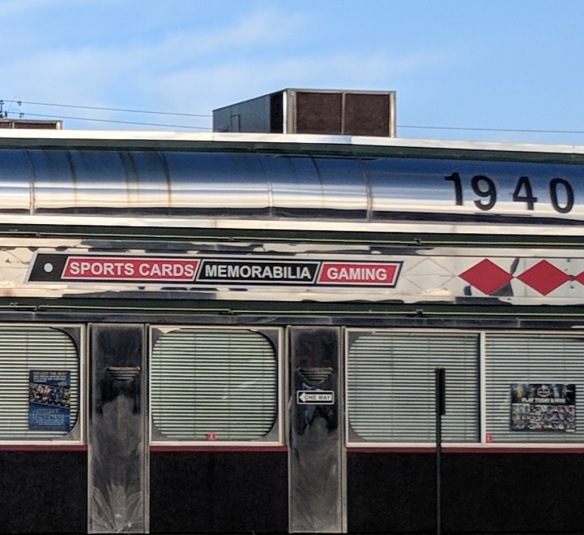
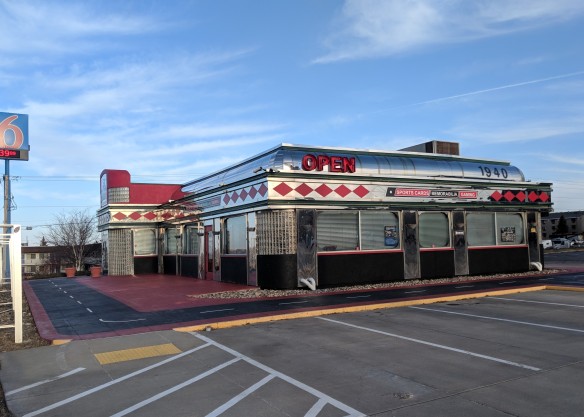
The Capital City diner, located at 1050 Bladensburg Rd. NE Washington DC, is set to close this weekend.

Friends,

We sincerely appreciate your support, patronage, and– most of all– friendship over the past two years. You’re more than customers; you’re our friends and neighbors.

Although we received positive response to our recent improvements, we also encountered rising costs, a declining economy, and a national chain “diner” restaurant opening almost a stone’s throw away. Now, we must refocus and reformat our restaurant to move forward.

This weekend, we’ll open from 7am until 6pm on Saturday and Sunday so that we can meet up one last time to say good-bye before we close to reformat and improve our concept.

Again, thank you for your support and encouragement, we’d love to see you one last time at the old diner to say good-bye this weekend.

Sincerely,

Matt & the Capital City Diner crew
diner@capitalcitydiner.com

White House Lunch Wagon – Cumberland, Maryland

Photobucket
Photobucket
The White House Lunch opened in Cumberland, Maryland in 1904, originally sited at the corner of Liberty St. and Baltimore St. In 1905 it moved nearly one block to an address near the corner of North Liberty St and Frederick St. It may have shuffled over a lot or two in 1907 to accommodate the offices of Charles. H. Wolford, but it didn’t go far, remaining roughly at 41 North Liberty Street until 1919.

The Lunch Wagon was owned by George A. Wadsworth and his soon Lloyd F. Wadsworth, who took over the business upon his father’s death in 1908. The lunch wagon was put up for sale in 1919 to James and Earl Bucy, who moved it to the site of the new Kelly Springfield Tire Company plant, which was being built across the river, and a little over a mile away. Construction on the plant started in 1917 and it was opened in 1921, so it’s easy to assume that the diner had a good two year run under the Bucy Brothers before being sold or scrapped.

From the name, “White House Lunch”, I wouldn’t be at all surprised to find that the place was made by T.H. Buckley of Worcester, MA. A date of manufacture of 1904 would put this right in Buckley’s heyday. The description of etched colored glass windows with portraits of great Americans points to Buckley’s style, as well.

Prospect Diner – Hagerstown, MD

Photobucket

The Prospect Diner opened Thursday, August 22, 1946. It was billed as Hagerstown’s Newest Diner, though the barrel roof design it followed would have been, by that point, ten to twenty years behind what the factories in Jersey were turning out. That said, for an on-site job, it played the “diner” game well, pulling heavily from factory built models, but with the great added twist of the full (structural?) glass brick windows. I can only imagine what this place would have looked like at night, with the entire roof seeming to hover over the heavy base, unsupported by window frames or pillars.
With the design what it is, I’m a bit surprised they didn’t take better advantage of the huge expanses of flat facade, like earlier builders were doing. I guess by 1946, that sort of lettering had more or less fallen out of use with just about everyone but Worcester, but the tiny signs by the front door seem like an afterthought.

The diner was located at 12 N. Prospect St., and has long since been demolished, and another building built on the site.

Trolley to Diner Conversion

What becomes of old trolley cars?, Popular Science asked.
Photobucket

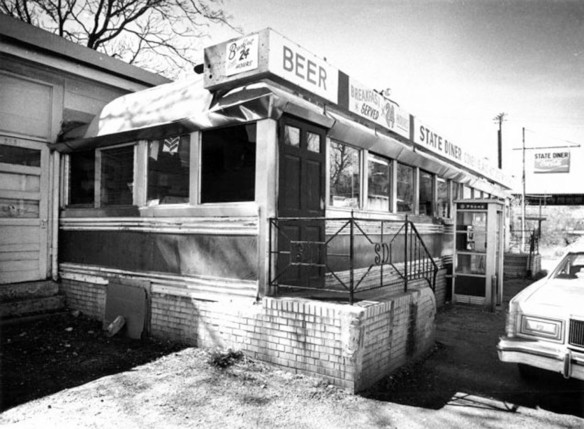
Many old trolleys were re-purposed into roadside restaurants. A diner-on-the-cheap. Not very many survived, due to their inconveniently narrow width, their already used and abused condition after a life on the streets, and their somewhat disreputable image next to new, factory built diners, built specifically for the purpose. While the one from the article hailed from New Jersey, I’ve found quite a few conversions existed in the early days in Maryland. Generally, as soon as enough money could be scraped together, they were replaced, as was the case of the State Diner in Baltimore, a used 1930s Silk City, which replaced a re-purposed streetcar in the 1950s.
Photobucket

Clearview Diner – Mount Joy, PA

The Clearview started out life as a small, five bay 1948 Paramount. It was pretty standard for a Paramount built diner of the late 1940s, which is to say it was extraordinary- with a sensuously curved roofline and strong vertical elements. From the postcard, it’s hard to say what the exterior finish is, but I would guess probably vertically ribbed stainless. It had a great rooftop neon, which, in true 1940s form read “steaks, chops, hamburgers”. You don’t see nearly enough Steaks and Chops being advertised these days. For other ’40s Paramount built diners along similar lines, allow me to direct you to: “Rajun Cajun” of Hartford, CT, a six-bay model from 1950, to the Vale-Rio Diner, another 1948 model.

In 1954, the diner was remodeled and drastically enlarged, adding three bays to the left side and bumping a dining room back quite a ways. Business must have been good! In keeping with this modernization, curved glass supplanted glass brick on the corners. A new, clock topped vestibule was added, and a parapet was added to the curvy monitor roof to give the entire place a continuous, 1954 modern roof line. The emphasis of the design was changed to the horizontal. The diner was topped off with metal awnings and a new freestanding neon, though the steaks-chops rooftop piece remained for at least a little while longer.

Later on, the “Diner” name was dropped, replaced with “The Clearview Dining Room and Coffee Shop”. See Richard J.S. Gutman’s chapter on the move away from the “diner” name in the 1960s in his book “The American Diner Then and Now”. Despite the name and neon changes, the exterior looks to have remained in-tact, with the addition of Pennsylvania Dutch Hex Signs.

In what I’m guessing was the 1960s, the diner was enlarged and remodeled again, with a mid-century modern coffee shop-style vestibule put up along the entire length of the original 1948 section of the diner. Orange tile, floor to ceiling glass, modernist lettering.

Later on, the “Diner” was reintroduced into the name of the Clearview, probably coinciding with the cultural “re-discovery” of the diner in the 1990s. It changed names to the Tic-Tac diner in 2009, but that chapter in its life was short lived. By 2012, the diner had been stuccoed over, painted, and is now known as Babbo’s Italian Grill. A photo of the new, ruined diner can be seen on the Diners of Pennsylvania facebook page.

Photobucket

Photobucket
Photobucket

As the Tic Tac Diner
Photobucket
Photo by Casey Kreider
LancasterOnline.com article

Jimmy’s Diner No. 1 – Auburn, Maine

You may remember my post of Jimmy’s Diner a few months ago, tracing postcard images of it through the decades. Now I have proper pictures of the place. Well- kind of. Somewhere underneath all of what’s there now still lies an early 1930s diner of indeterminate manufacture. It’s been covered since the ’60s and really and truly covered since the ’80s or so. The gas station is still there, too, but like the diner, it’s sprouted additions every which way that render the entire complex almost unrecognizable. Unfortunately, all the windows are boarded over so no interior shots / no way to identify the builder of the diner (on site, Mor-Lan, one of the big name companies). I would assume, however, that when they re-did the exterior for the last, and most drastic time, that whatever was left of the interior was obliterated.

In these first two pictures, the location of the original door is still visible, along with the later (’50s/’60s) horizontal windows, which enlarged the original ’30s style tall narrow ones. The roof and porch really do a lot to disguise the diner lineage of the building.
Photobucket

Photobucket

The back-side of the diner portion of Jimmy’s. Ignore, if you will, the roof and tack-on chimney, and this gives you a sense of the size of the diner.
Photobucket

Dead signage
Photobucket

The former gas station portion of the complex.
Photobucket