Outrider’s Diner – Laurel, MD

Outriders Diner was built by Kullman in 1937. It was demolished in 1999.
It was located at 9855 Washington Blvd. (Rt. 1) and Whisky Bottom Road, in North Laurel. It was attached to a bar, similar to the setup just down the road at the Tastee Diner (formerly the Laurel Diner).

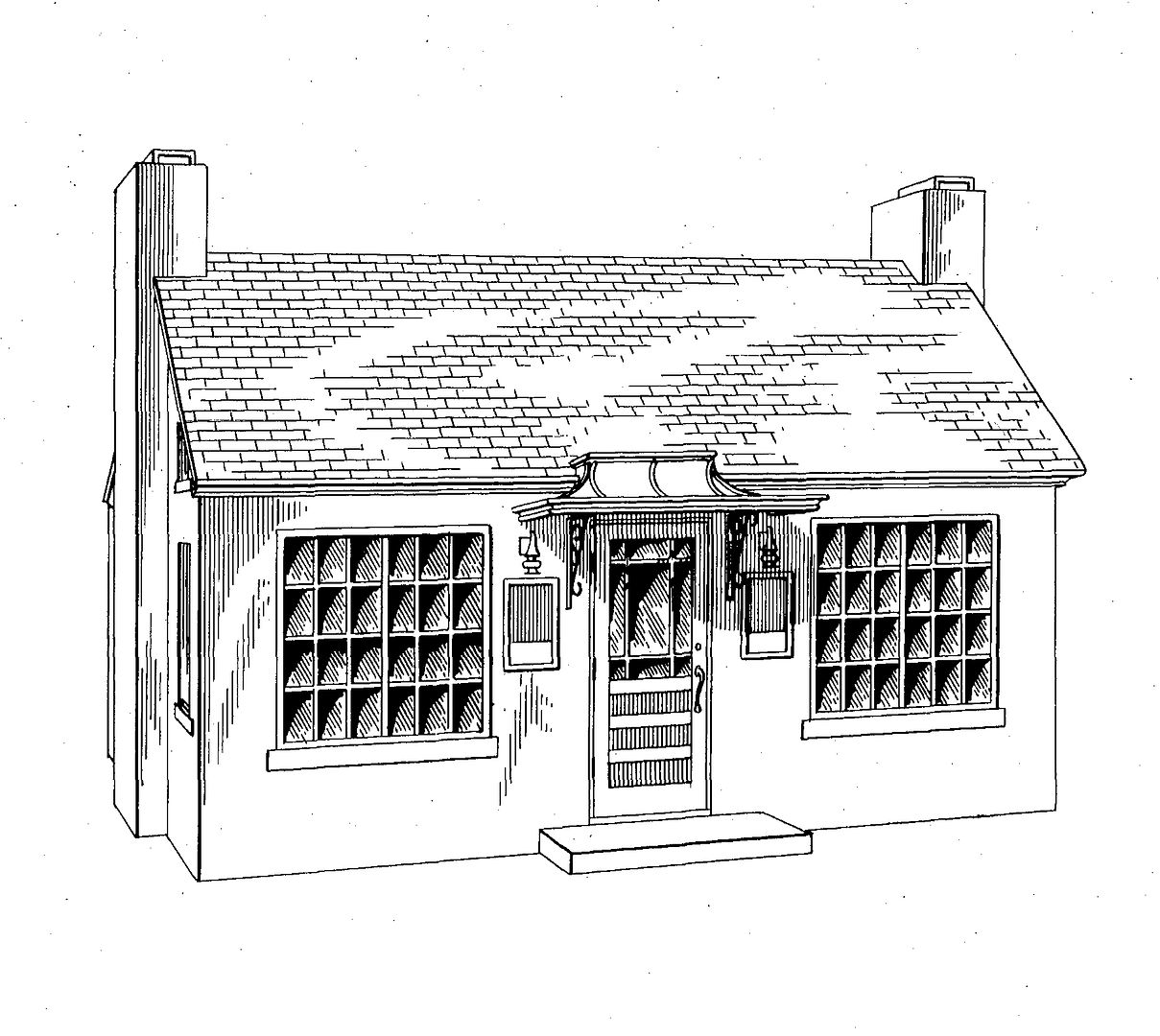
The setup of the diner is interesting, with the door at the end, by the glass brick corner. The door is flanked by a glass brick “delete” panel, keeping the window grid even. The fabric awning was replaced with a metal one sometime in the 1950s, and a vestibule was added, much more in keeping with the style (lack of style?) of the addition, than the diner.

Photobucket

Related pages: 01, 02

Clearview Diner – Mount Joy, PA

The Clearview started out life as a small, five bay 1948 Paramount. It was pretty standard for a Paramount built diner of the late 1940s, which is to say it was extraordinary- with a sensuously curved roofline and strong vertical elements. From the postcard, it’s hard to say what the exterior finish is, but I would guess probably vertically ribbed stainless. It had a great rooftop neon, which, in true 1940s form read “steaks, chops, hamburgers”. You don’t see nearly enough Steaks and Chops being advertised these days. For other ’40s Paramount built diners along similar lines, allow me to direct you to: “Rajun Cajun” of Hartford, CT, a six-bay model from 1950, to the Vale-Rio Diner, another 1948 model.

In 1954, the diner was remodeled and drastically enlarged, adding three bays to the left side and bumping a dining room back quite a ways. Business must have been good! In keeping with this modernization, curved glass supplanted glass brick on the corners. A new, clock topped vestibule was added, and a parapet was added to the curvy monitor roof to give the entire place a continuous, 1954 modern roof line. The emphasis of the design was changed to the horizontal. The diner was topped off with metal awnings and a new freestanding neon, though the steaks-chops rooftop piece remained for at least a little while longer.

Later on, the “Diner” name was dropped, replaced with “The Clearview Dining Room and Coffee Shop”. See Richard J.S. Gutman’s chapter on the move away from the “diner” name in the 1960s in his book “The American Diner Then and Now”. Despite the name and neon changes, the exterior looks to have remained in-tact, with the addition of Pennsylvania Dutch Hex Signs.

In what I’m guessing was the 1960s, the diner was enlarged and remodeled again, with a mid-century modern coffee shop-style vestibule put up along the entire length of the original 1948 section of the diner. Orange tile, floor to ceiling glass, modernist lettering.

Later on, the “Diner” was reintroduced into the name of the Clearview, probably coinciding with the cultural “re-discovery” of the diner in the 1990s. It changed names to the Tic-Tac diner in 2009, but that chapter in its life was short lived. By 2012, the diner had been stuccoed over, painted, and is now known as Babbo’s Italian Grill. A photo of the diner in its current state can be seen on the Diners of Pennsylvania facebook page.

Photobucket

Photobucket
Photobucket

As the Tic Tac Diner
Photobucket
Photo by Casey Kreider
LancasterOnline.com article

El Sombrero Inc – Avondale, PA

El Sombrero Inc. is a 1952 Mountain View built diner with a 1961 Kullman dining room. It had been known as the Avon Grove Diner. By the 1990s, it had been mansard-ed, and since then, the stainless steel and the mansard roof have been covered with irregularly sized boards, painted in a vibrant red, white and yellow to harmonize more with its current usage as a tortilleria and carniceria. The overall lines of the exterior of the diner show through despite these modifications, and the stainless shows through a bit where some of the renovations have dropped off.

Photobucket

Photobucket

Photobucket

Five Point Diner- Tamaqua, PA

This is an unusual 1940 O’Mahony. It looks like the diner was a fairly standard pre-war monitor roof Monarch model. The roofline looks like it was a square-cornered model, but a later-production one, after they dropped the trapezoidal transoms. With the remodeling and the imprecise nature of the linen postcard, though hard to be 100% certain of that. The postcard is from c.1955, so it’s entirely possible that the stainless over the windows was a later 40s or early 1950s update (along with other aspects of the facade), covering those windows for a more streamlined look.
What makes it really unusual is its siting and the treatment of the entry. It is sited as though it were a flatiron building, on a long, narrow finger of land projecting into a five-way intersection (hence the Five Point name), with an extended end vestibule, projecting three windows further from the beginning of the diner proper. The end-vestibule looks to have a combination of curved glass and glass bricks for the corners, but without a proper photo, it’s difficult to say for sure.

The diner has suffered at the hands of remodeling and usage change. The counter and fixtures are gone, but the original ceiling is still visible. The exterior has been bricked over and a peaked roof has been dropped overtop the diner, but the fantastic stainless front door belies the building’s diner pedigree.
Photobucket

Photobucket

Photobucket

Front Royal Diner

This Mountain View diner, formerly the Mount Vista diner, among other names, is now Virginia Auto Group Used Cars. It is located at 1718 N. Shenandoah Ave., Front Royal, VA. The small town of Front Royal used to be rich with diners, and was formerly home to the Eat Well diner, a brightly painted homebuilt, this one, and the Fox Diner, a ’50s Donut Dinette- a small metal diner- concept chain that used to have locations through the Southern states. There was also the Royal Dairy, a fantastic old lunch counter / restaurant. The Eat Well is long gone, the Fox was demolished several years ago, and the Royal Dairy was gutted.

The former Mount Vista Diner (by the 1990s known as Sandy’s Diner) is 1957 Mountain View #489. It opened in Crownsville, Maryland and was moved to Front Royal c. 1963.

The first picture was taken in the early 1990s, the second was taken yesterday.
Photobucket

The Mighty Midget Kitchen

The Mighty Midget in 1980. It was built by a Glendale, California based firm post-war from a section of bomber fuselage. Apparently they built seven of them, and this is the only one to have survived.

From the 1940s through its closing, it cooked standard grill fare- burgers and hot dogs. It did a stint post-move and post-restoration as a Barbecue place, and now is part of a German Doner restaurant.
Photobucket

And 30 years later. It closed in 1994 and was moved to the current site in 1996. The stone gas station which is used to sit next to is now a pie shop.
Photobucket

Diner Find: Peter’s Carry Out

You would never know to look at it from the street. For years I’ve been going to Potter’s and Weaver’s violin shop, which share a back parking lot with Peter’s. For years I’ve been going to the Tastee just a few blocks away, and I’ve stood under the awning of Peter’s to shield my camera from glare while taking pictures of the former Little Tavern located right across the street. But for whatever reason, I’ve never looked inside.
Photobucket

But sure enough, back in behind the facade of this little shopping strip lies a surprise. A long row of stools and a barrel roof. Whereas all the other buildings in this strip have basements, Peter’s does not. The barrel roof visible on the inside of the diner, is finished for exterior use on the top side, in a space which is now an attic, with the long ago addition of a flat roof, flush with the rest of the businesses on that street. Google satellite photos show a clear seam on either side of Peter’s. All that confirms that Peter’s was not built on site, but was something “other” from the fabric of the streetscape, brought in from somewhere else and set up.

Now let’s take a look at the building itself. Old newspaper articles talk about Maryland being a haven for streetcar-turned-diner conversions in the depression era. Most disappeared as soon as the owners were able to scrape together enough money to buy a proper factory built diner. Take the fomer State Diner in Baltimore, for example, which was a trolley diner until it was replaced with the current secondhand 1930s Silk City in the early 1950s (the Silk City was the original Laurel Diner- now the Tastee). Here’s another interesting Maryland trolley to diner conversion.
With a trolley conversion, like the White Diner or the Crossroads Dinor you would expect to find curved ends. While the original front wall of Peter’s has been punched out to allow more light from the storefront and more seating, it’s clear that the end walls (the one in back as well) are flat, but with curved corners, which makes me think it is far more likely that this was a factory built-purpose built diner.

Photobucket

The ends of the diner have a curve running perpendicular to that of the main barrel, similar to a Silk City roof, not like, say, a ’20s O’Mahony or Tierney. The roof has a distinctive profile- not a smooth curve, but one that has steeper slopes on the sides and a flatter roof. The closest thing I can think of with this particular roofline is a very early, narrow Silk City model. A surviving example would be the West Shore Diner. There is also an abandoned diner of this Silk City model in Montana (formerly Gordy’s) and the Miss Jersey City diner, now long gone.

Here is a picture of the interior of the West Shore for comparison. The Silk City is wider, but the similarities in the barrel roof are notable. Same profile, same curve at the ends. With all the years of modification and renovation at Peter’s, though, the definition of the barrel profile could have been somewhat lost, making real identification difficult. The shape, though, is undeniably that of a diner.
Photobucket

The backbar gives insight into its history, but not its origin. Custom-Bilt National Toddle House, Inc.
Photobucket

The patent numbers, from 1933 and 1934, correspond to the backbar equipment which was found in all Toddle House restaurants at the time. And sure enough, this building had a long stretch operating as a Toddle House.
Photobucket

Toddle House was yet another diner-concept early fast food place, similar in its early days to White Tower, Little Tavern, etc. Like Little Tavern, they used a very small tudor cottage style building. While Little Tavern had the counter oriented perpendicular to the front facade, Toddle House had theirs, diner style, parallel to the front. So for a restaurant which was just stools and a grill, it’s easy to understand why, and how they would take over a barrel roof diner like this. It also means that the first of many renovations, disguising the diner’s true origins, took place 75 years ago, when the diner itself was still relatively new.
Photobucket

And here are some news stories from the late 1950s, mentioning it as a Toddle House.

Photobucket

Photobucket

Photobucket

Peter’s Carry out has a website!
It’s located at 8017 Wisconsin Ave, Bethesda, MD 20814

Hollywood Diner- Baltimore, MD

http://www.abc2news.com/dpp/news/region/baltimore_city/hollywood-diner,-where-movie-parts-were-filmed

The Hollywood Diner of Baltimore, MD was recently reopened by Cheryl Townsend, owner of the Red Springs Cafe. Took a swing by there today around 7, but it looks from the news story like they close at 5:00.

In other Baltimore diner news, it appears the former State Diner, an early 1930s Silk City- one of the older ones around- has closed again.

Photobucket

Photobucket

Photobucket

Photobucket